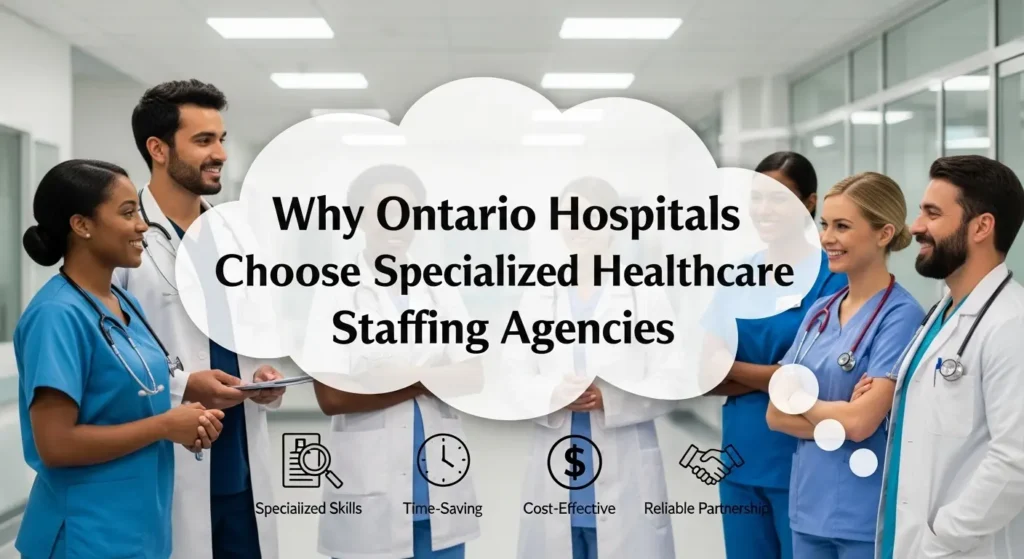
The healthcare landscape in Ontario is facing unprecedented challenges. From an aging population requiring more complex care to widespread staff burnout following the pandemic, hospitals and long-term care facilities are struggling to maintain adequate staffing levels. In this environment, specialized healthcare staffing agencies have become not just helpful—they’ve become essential partners in delivering quality patient care.
Unlike general employment agencies that dabble in healthcare among dozens of other industries, specialized healthcare staffing agencies understand the unique demands of Ontario’s medical facilities. They speak the language of healthcare, know the regulatory landscape inside and out, and maintain networks of qualified professionals ready to step in when needed most.
Here’s why Ontario hospitals are increasingly turning to specialized staffing partners to meet their workforce needs.
1. Deep Understanding of Healthcare-Specific Regulations and Compliance
Healthcare in Ontario operates under a complex web of regulations that general staffing agencies simply aren’t equipped to navigate. Specialized healthcare staffing agencies live and breathe these requirements daily.
College of Nurses of Ontario (CNO) Compliance
Every registered nurse or nurse practitioner working in Ontario must maintain current CNO registration with specific practice standards. Specialized agencies maintain real-time verification systems that confirm not just registration status, but also any practice restrictions, continuing education requirements, and specialized certifications. This isn’t a one-time check—it’s ongoing monitoring that protects hospitals from compliance violations that could result in fines or compromised accreditation status.
Provincial Licensing Requirements
Whether it’s physiotherapists regulated by the College of Physiotherapists of Ontario, respiratory therapists under the College of Respiratory Therapists of Ontario, or personal support workers meeting provincial standards, specialized agencies understand the licensing landscape for every healthcare role. They know which credentials transfer across provincial lines when bringing in out-of-province talent, and which additional assessments or bridging programs are required.
Workplace Safety and Insurance Board (WSIB) Requirements
Healthcare staffing involves specific WSIB considerations that generalist agencies often mishandle. Specialized agencies ensure proper classification of workers, maintain appropriate insurance coverage, and understand the claims process for healthcare-specific workplace injuries. This protects hospitals from liability exposure and ensures injured workers receive proper benefits.
The cost of non-compliance isn’t just financial—it’s reputational damage, potential patient safety issues, and regulatory scrutiny that can disrupt operations for months. Specialized agencies eliminate these risks through systematic compliance management.
2. Access to Pre-Vetted, Qualified Healthcare Professionals
Finding qualified healthcare staff isn’t like hiring office workers. The vetting process requires clinical assessment, credential verification, and evaluation of specialized skills that general recruiters can’t properly conduct.
Clinical Competency Assessment
Specialized agencies employ healthcare professionals with clinical backgrounds who can accurately assess candidate competencies. They conduct skills validations that go beyond resume review—testing medication administration knowledge, emergency response capabilities, equipment proficiency, and clinical judgment. This means when a nurse arrives at your facility, you can trust they actually possess the skills listed on their profile.
Specialty-Specific Matching
A critical care nurse and a pediatric nurse may both be registered nurses, but their skill sets are vastly different. Specialized agencies maintain detailed profiles of each professional’s experience across specific units—emergency departments, intensive care units, medical-surgical floors, operating rooms, labor and delivery, mental health units, and more. They understand the difference between someone who worked briefly on a unit five years ago and someone with recent, sustained experience in that specialty.
Ongoing Professional Development Tracking
Healthcare knowledge and protocols evolve constantly. Specialized agencies track their professionals’ continuing education, ensuring they stay current with the latest evidence-based practices, new equipment, updated protocols, and emerging treatments. This is particularly crucial in specialties like oncology, cardiology, and infectious disease where clinical guidelines change frequently.
3. Rapid Response to Urgent and Last-Minute Staffing Needs
Healthcare emergencies don’t wait for convenient business hours. Patient census fluctuates unpredictably, staff call in sick, and sudden influxes of admissions can strain even the best-staffed units. Ontario hospitals need staffing partners who can respond with the same urgency that clinical situations demand.
24/7 Availability
Specialized healthcare staffing agencies operate around the clock because healthcare operates around the clock. When your night shift nurse calls in sick at 10 PM, you need a replacement before the shift starts at 11 PM, not when the staffing office opens at 9 AM tomorrow. Top agencies maintain dedicated on-call teams who can mobilize qualified professionals at any hour, including weekends and holidays.
Established Professional Networks
General staffing agencies start from scratch each time you need someone. Specialized agencies maintain ongoing relationships with pools of healthcare professionals—many who work regularly with the agency and can be contacted directly when urgent needs arise. These professionals are already vetted, already familiar with various Ontario facility types, and often available on short notice because they’ve structured their careers around flexible assignments.
Geographic Coverage Across Ontario
Whether you’re in downtown Toronto, suburban Mississauga, or rural communities in Northern Ontario, specialized agencies maintain professional networks across the province. They understand the unique challenges of rural recruitment and urban competition, and they’ve built relationships with professionals willing to travel or relocate temporarily to meet facility needs.
4. Cost-Effectiveness Through Reduced Turnover and Training
While some administrators initially balk at agency rates, specialized healthcare staffing often proves more cost-effective than the alternatives when you examine the total financial picture.
Elimination of Recruitment and Onboarding Costs
Recruiting a single registered nurse can cost Ontario hospitals between $8,000 and $15,000 when accounting for job postings, recruiter time, interview coordination, credential verification, background checks, and onboarding. This doesn’t include the 2-4 months typically required to fill the position, during which existing staff work overtime or units operate understaffed. Specialized agencies absorb all these costs as part of their service.
Reduced Overtime Expenses
When permanent staff work excessive overtime to cover gaps, you’re paying time-and-a-half or double-time rates while also accelerating burnout that leads to more sick days and eventual turnover. Bringing in qualified agency staff at regular rates, even if those rates are higher than base pay, often costs less than the overtime alternative while protecting your core team’s wellbeing.
Minimal Training Requirements
Because specialized agencies send professionals with recent, relevant experience, orientation time shrinks dramatically. An experienced ICU nurse from an agency might need just a facility tour and electronic health record training before working independently, rather than the weeks or months required to orient a new graduate or someone transitioning from a different specialty.
Flexibility Without Long-Term Obligations
Healthcare census fluctuates seasonally and unpredictably. Hiring permanent staff for peak periods leaves you overstaffed during quieter times. Agency relationships provide workforce elasticity—scaling up during flu season, COVID surges, or summer when permanent staff take vacation, then scaling down when demand normalizes. You pay only for the hours you actually need.
5. Specialized Knowledge of Ontario Healthcare Environment
Ontario’s healthcare system operates differently than other provinces or countries, with unique funding models, regulatory frameworks, and care delivery expectations. Specialized provincial agencies understand these nuances in ways national or international staffing companies cannot.
Understanding of Ontario’s Healthcare Funding Models
From Quality-Based Procedures (QBPs) to the Health System Funding Reform, Ontario hospitals operate under specific funding mechanisms that influence staffing decisions. Specialized agencies understand how these models impact your staffing budget and can work within your fiscal constraints while maintaining quality. They know when temporary staffing makes more financial sense than permanent hires given current funding structures.
Familiarity with Electronic Health Record Systems
Ontario facilities use various EHR systems—Meditech, Cerner, Epic, and others. Specialized agencies track which professionals have experience with which systems, minimizing training time when documentation requirements are similar across facilities. They can match experienced Epic users with Epic facilities, for example, enabling faster integration into workflows.
Knowledge of Regional Healthcare Dynamics
Healthcare delivery varies significantly across Ontario. Urban teaching hospitals in Toronto operate differently than community hospitals in London, which differ from northern rural facilities. Specialized agencies understand these variations and match professionals accordingly. They know which nurses thrive in fast-paced academic centers versus those who prefer the different rhythms of community care or rural practice.
Understanding of Collective Agreements and Labor Relations
Many Ontario healthcare facilities operate under collective agreements with specific provisions about casual staff, agency workers, and contractor relationships. Specialized agencies understand these labor relations frameworks and structure their services to complement—not complicate—existing union agreements. They know how to work within scope of practice guidelines, seniority systems, and other collectively bargained provisions.
6. Risk Mitigation and Quality Assurance
Every person who works in your facility represents potential risk—to patients, to your reputation, and to your liability exposure. Specialized healthcare staffing agencies implement comprehensive risk management strategies that protect both the facility and the patients it serves.
Comprehensive Background Screening
Healthcare staffing requires deeper background checks than most industries. Specialized agencies conduct vulnerable sector checks, verify employment history directly with previous employers (not just accepting references), check for professional discipline with regulatory colleges, and maintain ongoing monitoring for any changes in professional standing. If a nurse’s license is suspended mid-contract, the agency knows immediately and removes them from active duty.
Professional Liability Insurance
Every healthcare professional carries inherent liability risk. Specialized agencies ensure their staff maintain appropriate professional liability insurance that complements your facility’s coverage. They understand the specific coverage requirements for different roles and practice environments, ensuring gaps don’t exist that could expose your facility to uncovered claims.
Performance Monitoring and Feedback Systems
Quality specialized agencies don’t just place professionals and disappear. They maintain active performance monitoring through regular facility feedback, addressing concerns immediately when they arise. If a placed professional isn’t meeting expectations, specialized agencies work quickly to resolve issues or provide a replacement, rather than leaving facilities to manage problematic performers.
Infection Prevention and Control Compliance
Particularly crucial in the post-pandemic era, specialized agencies ensure their professionals maintain current immunization records, understand proper PPE protocols, and stay updated on evolving infection control standards. They track flu shots, COVID vaccinations, TB screening, and other required immunizations, ensuring compliance before professionals ever set foot in your facility.
7. Focus on Cultural Fit and Long-Term Relationships
The best healthcare staffing relationships extend beyond transactional placements. Specialized agencies invest in understanding your facility’s culture, values, and specific preferences, leading to better matches and smoother integrations.
Learning Your Facility’s Unique Needs
Every healthcare facility has its own personality. Some operate with military precision while others maintain more relaxed environments. Some prioritize cutting-edge protocols while others value deep community connections. Specialized agencies take time to understand these cultural elements, then match professionals who will thrive in your specific environment. This isn’t something that happens in a single placement—it develops through ongoing partnership.
Building Pools of Familiar Faces
Rather than sending different professionals each time, specialized agencies work to create consistency by matching the same proven performers with your facility repeatedly. Over time, these professionals become familiar with your specific workflows, know your team members, and integrate more seamlessly than someone arriving for the first time. Some facilities develop preferred lists of agency professionals they specifically request.
Temp-to-Permanent Pathways
Many specialized agencies facilitate temp-to-permanent arrangements when both the facility and the professional want to make the relationship permanent. This try-before-you-buy approach reduces hiring risk dramatically—you’ve already seen the person perform in your actual environment under your actual conditions, eliminating the uncertainties that come with traditional hiring.
Dedicated Account Management
Rather than calling a generic hotline each time you need staff, specialized agencies assign dedicated account managers who become intimately familiar with your facility’s needs, preferences, and history. These account managers proactively reach out during predictable high-need periods, remember your previous requests, and work to continuously improve service based on your feedback.
8. Ability to Fill Hard-to-Recruit Specialty Positions
Some healthcare positions remain chronically difficult to fill through traditional recruitment. Specialized agencies maintain networks of professionals in these high-demand specialties that general agencies simply cannot access.
Critical Care and ICU Specialists
Finding experienced critical care nurses requires more than posting a job ad. These highly specialized professionals are in demand everywhere, and convincing them to move facilities takes targeted recruitment and attractive packages. Specialized agencies maintain relationships with ICU nurses across Ontario and beyond, including those willing to take travel assignments in areas experiencing shortages.
Operating Room Teams
OR nurses, surgical technologists, and anesthesia assistants require extensive specialized training and experience. Many facilities struggle to maintain full surgical capacity due to OR staffing shortages. Specialized agencies can provide complete OR teams for specific procedures or ongoing support, helping facilities maintain surgical volume and revenue.
Rural and Remote Positions
Northern Ontario facilities face unique recruitment challenges. Specialized agencies have established networks of professionals specifically interested in rural practice, travel nursing, or northern incentives. They understand what it takes to recruit for these positions—higher compensation, housing assistance, relocation support—and they’ve built relationships with professionals seeking these experiences.
Specialized Allied Health Professionals
From respiratory therapists to occupational therapists to cardiac sonographers, specialized allied health roles often sit vacant for months through traditional recruitment. Specialized agencies maintain relationships with professionals in these niche fields who are open to contract work, providing access to talent you might never find through conventional channels.
The Strategic Value of Specialized Healthcare Staffing Partnerships
As Ontario’s healthcare system continues evolving—facing demographic pressures, workforce shortages, and changing care delivery models—the role of specialized healthcare staffing agencies becomes increasingly strategic rather than simply transactional.
The hospitals and healthcare facilities that thrive will be those that view staffing agencies not as a last resort when desperation hits, but as integral partners in workforce planning and management. The best partnerships develop over time, built on mutual understanding, consistent communication, and shared commitment to patient care quality.
When evaluating healthcare staffing agencies, look beyond just rates and availability. Consider their depth of healthcare-specific expertise, their understanding of Ontario’s regulatory environment, their commitment to ongoing quality assurance, and their investment in building long-term relationships rather than just filling immediate gaps.
In an industry where staffing challenges directly impact patient outcomes, choosing the right staffing partner isn’t just an operational decision—it’s a strategic imperative that affects your facility’s ability to deliver safe, effective care.
—
About Maple Health Staffing
Maple Health Staffing is a specialized healthcare staffing agency serving hospitals, long-term care facilities, and healthcare organizations across Ontario. With deep expertise in Canadian healthcare regulations, extensive networks of qualified professionals, and a commitment to quality and compliance, we partner with facilities to solve their most challenging staffing needs. Contact us to learn how we can support your facility’s staffing requirements.